Aluminium is one of the most popular metals globally and is widely used in almost every industry. It’s lightweight, durable, flexible, and corrosion-resistant, making it an excellent choice for many applications. Aluminium 5083 is a special kind of aluminium alloy that has become increasingly popular in recent times. In this blog post, we’ll discuss the properties, uses, and composition of Aluminium 5083 sheets.
What Are Aluminium 5083 Sheets?
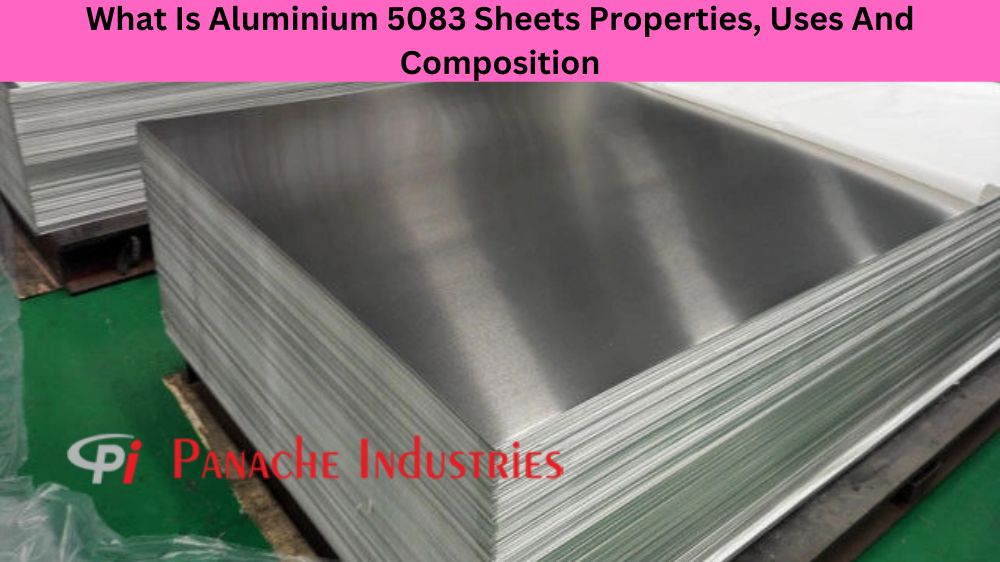
Aluminium 5083 Sheets are high-strength aluminium alloys widely used in various industries such as marine, aerospace, and automotive. These sheets are known for their exceptional corrosion resistance, weldability, and good formability. Their superior strength-to-weight ratio makes them ideal for structures requiring lightweight yet durable components. Aluminium 5083 Sheets also offer excellent thermal and electrical conductivity properties. Overall, these sheets offer a versatile and reliable solution for various applications.
Properties Of Aluminium 5083 Sheets
Aluminium 5083 has unique properties, making it an ideal metal for numerous applications. First, its superior corrosion resistance is an excellent choice for marine applications. Moreover, it has outstanding welding and fabrication properties, which means it can be easily shaped and welded without compromising its structural integrity. Additionally, Aluminium 5083 is lightweight but strong, making it a good choice for applications requiring strength and weight reduction.
Uses Of Aluminium 5083 Sheets
Aluminium 5083 finds applications in various industries, such as aerospace, automotive, shipbuilding, and defence manufacturing. Aluminium 5083 is commonly used in the marine industry to construct ship hulls, decks, and marine structures. In the aerospace industry, it’s used to make aircraft parts, such as fuselage skins, wing skins, and bulkheads. Aluminium 5083 Sheets is used in the automotive industry to manufacture engine blocks, wheels, and suspension systems.
Composition Of Aluminium 5083 Sheets
Aluminium 5083 is part of the Aluminium-Magnesium family of alloys, with magnesium being the primary alloying element, followed by manganese and chromium. The alloy’s chemical composition typically comprises 4.0% to 4.9% magnesium, 0.4% to 1.0% manganese, 0.05% to 0.25% chromium, and trace amounts of other elements like iron and silicon. This composition gives the alloy enhanced corrosion resistance, strength-to-weight ratio, and weldability.
Machinability Of Aluminium 5083 Sheets
Aluminium 5083 is usually supplied in the H0 temper, which means the material is fully annealed. This condition gives Aluminium 5083 excellent machinability, as it has no residual stresses and can be easily cut, drilled, and formed. However, the material tends to work hard quickly, making the machining process more challenging. Therefore, it’s essential to use the proper cutting tools, cooling fluids, and machining parameters to achieve good results.
Surface Treatment Of Aluminium 5083 Sheets
Aluminium 5083 sheets can be treated to improve their surface finish and enhance their resistance to corrosion and wear. Various surface treatments, such as anodising, painting, and powder coating, are available. Anodising is the most commonly used surface treatment, as it creates a thick, protective oxide layer on the material’s surface, improving its corrosion resistance.
Conclusion
Aluminium 5083 is a versatile and valuable alloy that finds applications in various industries. Its unique properties and composition make it an excellent choice for applications that require a high strength-to-weight ratio, corrosion resistance, and good weldability. If you’re looking for a material that can withstand harsh environments and provide long-term performance, consider Aluminium 5083 sheets.